
How to Tie Your Hair Under the Hijab to Maintain Healthy Hair | HIJAB-VIP
The hijab is a symbol of beauty and modesty, and an essential part of the identity of millions of women around the world. However, some hijabi women may face challenges related to hair health, such as dryness, breakage, and hair loss. These issues often result from incorrect methods of tying the hair under the hijab. Paying attention to how hair is styled under the hijab is just as important—if not more important—than caring for it on regular days.
In this article, we review a set of effective tips and techniques to maintain healthy, strong hair, with a focus on the correct way to tie hair under the hijab.
How Can You Style Your Hair Under the Hijab in a Healthy and Elegant Way?
- Loose low bun:
- One of the best hairstyles, as it reduces pressure on the scalp and allows the hijab to be worn comfortably.
- Side or back braid:
- A practical hairstyle that keeps hair neat, reduces tangling, and prevents excessive pulling on the hair follicles.
- Loose low ponytail:
- Suitable for daily wear, especially for long hair, but it should not be tied tightly.
- Half-up style:
- Distributes hair evenly and reduces pressure on a single point.
- Using a silk or satin undercap:
- Worn beneath the hairstyle to protect hair from friction and dryness, and helps keep the style in place under the hijab.
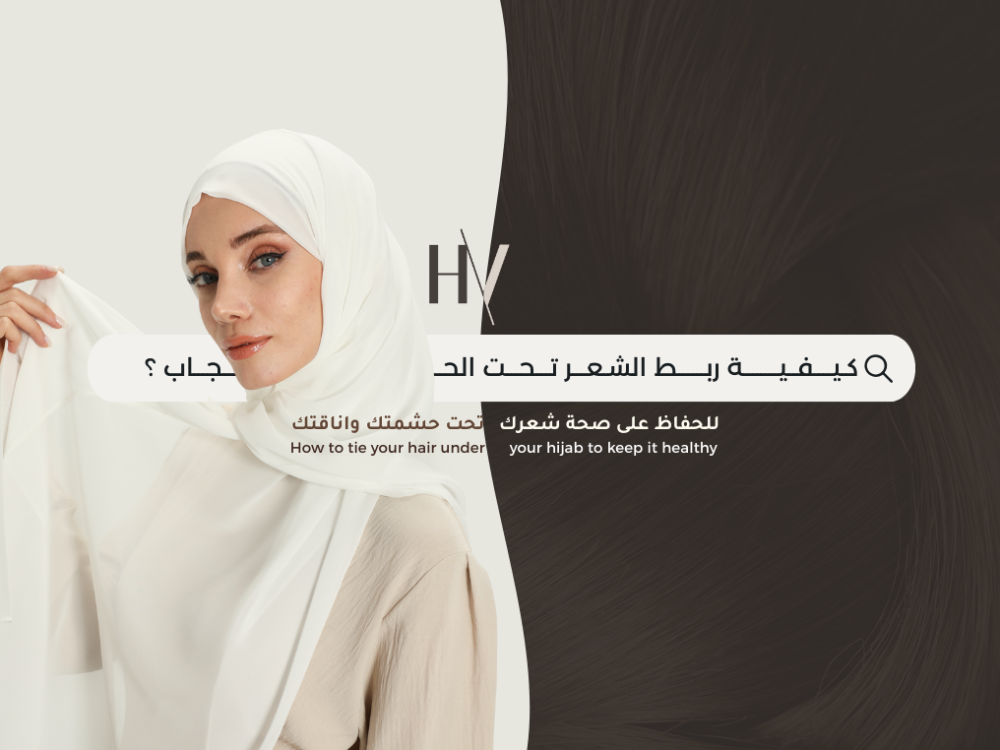
How to tie your hair under the hijab
What Is the Role of Bandanas in Protecting Hair Under the Hijab?
- They prevent direct friction between the hair and the hijab, reducing breakage.
- They help secure the hairstyle and maintain the hijab’s shape throughout the day.
- They act as a barrier that absorbs sweat and reduces moisture buildup on the scalp.
What Types of Bandanas Are Best for Hair Health?
- Cotton bandana:
- Allows ventilation but may absorb moisture from the hair, causing dryness.
- Polyester bandana:
- Practical and affordable, but increases friction, which may cause frizz.
- Satin or silk bandana:
- The best option for hair protection, as it reduces friction and helps retain moisture.
Understanding the Problem: Why Does Hair Weaken Under the Hijab?
Hair that is continuously covered by the hijab may suffer from poor ventilation, leading to the accumulation of sweat and moisture on the scalp. This creates an ideal environment for bacteria and fungi to grow. In addition, constant pressure from tying the hair in unhealthy ways can cause breakage and weaken the hair follicles.
Pulling hair tightly backward or using very tight hair ties can lead to traction alopecia, a form of hair loss caused by repeated tension.
Golden Tips for Tying Hair Under the Hijab
Use Comfortable, Flexible Hair Ties
Avoid tight elastic bands or those with metal parts, as they cause friction and breakage. Choose hair ties made from soft materials like satin or silk. These reduce friction and protect the hair structure. Large, padded scrunchies are ideal for controlling hair without pulling it too tightly.
Do Not Tie Hair Too Tightly
Avoid tight hairstyles such as high ponytails or tight buns. These styles place excessive pressure on the scalp and damage hair follicles. Instead, opt for loose styles. A loose low bun or soft braid are excellent options. Make sure your hairstyle does not cause discomfort or pain.
Avoid Tying Hair While It Is Wet
Tying hair under the hijab while it is still damp is one of the biggest mistakes. Wet hair is at its weakest and more prone to breakage. Additionally, moisture trapped under the hijab creates a humid environment that may lead to dandruff or scalp fungal infections. Always wait until your hair is completely dry before wearing the hijab.
Change the Position of the Hair Tie Regularly
If you tie your hair in the same spot every day, repeated pressure can cause weakness and breakage in that area. Try changing the position of the tie daily—sometimes higher, sometimes lower, or to the side—to distribute pressure evenly across the hair.
Use Inner Caps Made from Natural or Smooth Materials
Inner caps made of cotton or polyester may increase friction. It is better to use silk or satin inner caps, as they reduce friction and help retain the hair’s natural moisture, preventing dryness.
Hair Care Routine
Correctly tying hair under the hijab is not the only solution—it should be part of a complete hair care routine:
- Wash hair regularly:
- Using a suitable shampoo removes dirt and buildup, keeping the scalp clean.
- Deep conditioning:
- Regular use of conditioner and deep moisturizers restores moisture and vitality, especially since the hijab may reduce air exposure, making hair more prone to dryness.
- Scalp massage:
- Massaging the scalp with fingertips or a special massage brush improves blood circulation and promotes hair growth.
- Healthy nutrition:
- A balanced diet rich in proteins, vitamins, and essential minerals (such as biotin, iron, and zinc) has a direct impact on hair strength and beauty.
Conclusion
Paying attention to how you tie your hair under the hijab is a simple step with a significant impact on hair health. By following these tips, you can combine modest elegance with healthy, vibrant hair—allowing the hijab to remain a symbol of both inner and outer beauty.